The magic of the Helford River
Discover the timeless beauty of the Helford as we celebrate World Rivers Day on 27th September.
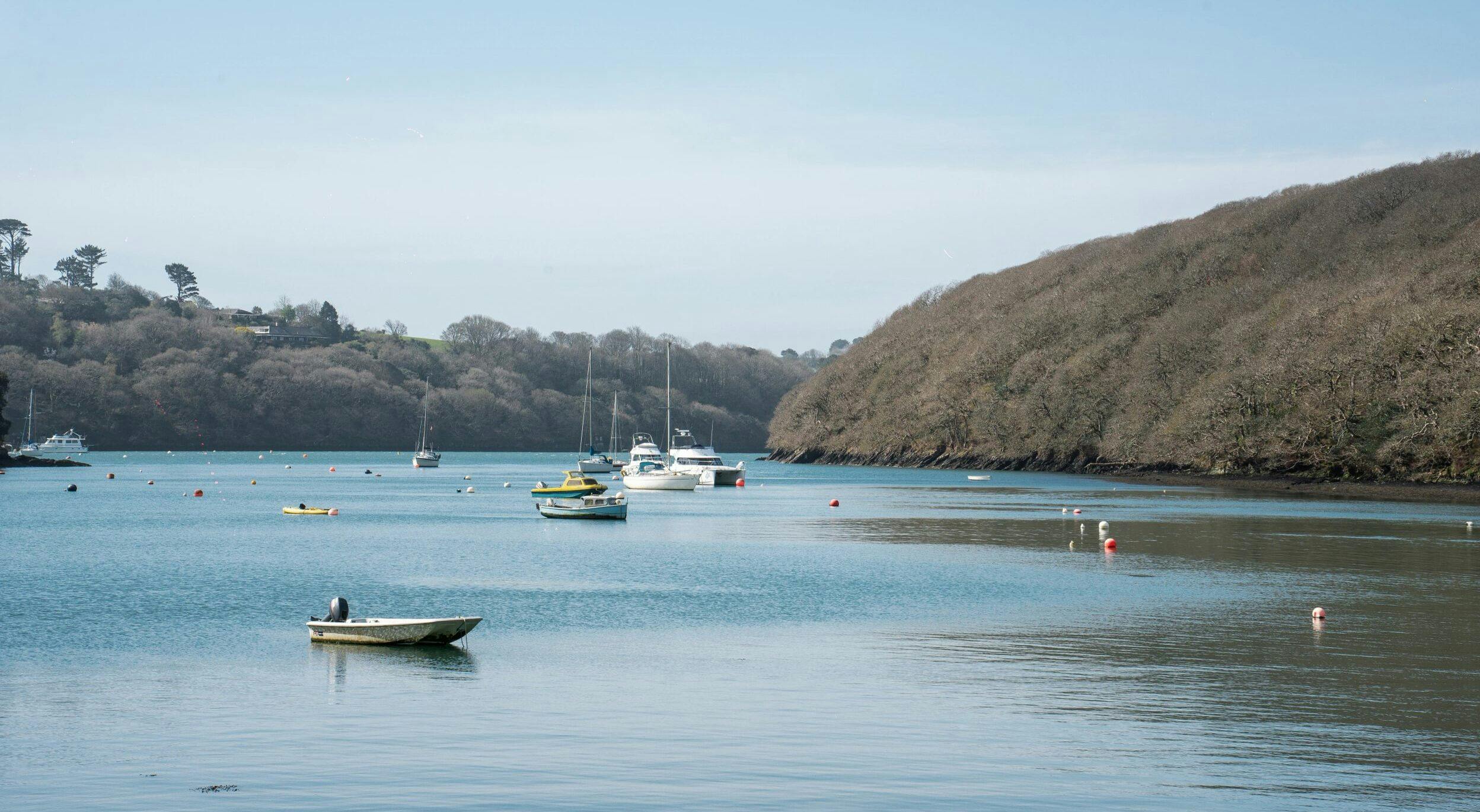
The magic of the Helford River
At Budock Vean Hotel & Spa, we are fortunate to have one of Cornwall’s most precious natural treasures, the Helford River, on our doorstep. To mark World Rivers Day on 27th September, we’re taking a closer look at what makes this enchanting stretch of water so special.
A river shaped by time
The Helford is the most southerly river in the UK, although it is technically a broad tidal estuary stretching for around 5.5 miles.
At low tide, the muddy foreshore becomes a feeding ground for seabirds and waders, while beneath the surface lies some of the richest marine life found anywhere along the British coast. Thick beds of eelgrass sway with the currents; oysters and mussels, once harvested by Roman soldiers, cling to the rocks and glisten in the shallows. Multicoloured periwinkle shells scatter the beaches, while water-smoothed trunks of fallen trees form natural bridges between land and sea.
Around 30 small streams feed its seven creeks: Ponsontuel, Port Navas, Gillan, Frenchman’s, Polwheveral, Mawgan and Polpenwith. It is difficult to picture today, but these peaceful waterways are a network of branching drowned valleys, submerged as sea levels rose at the end of the last Ice Age.
Frenchman’s Creek is perhaps most famous, immortalised in Daphne du Maurier’s beloved novel. From April to October, Helford River Cruises operate from the private foreshore at Budock Vean Hotel, offering a 90-minute boat trip along the Helford River into magical creeks including Frenchman’s Creek. As the water laps along the shore, picture the days of pirate’s, love and adventure, and explore the place behind the novel.
Where ancient woodland meets the sea
At high tide, the Helford reveals a different character. Its shoreline winds for some 27 miles, much of it edged by ancient oaks that reach down towards the water. Seaweed catches in their boughs, a striking reminder of what makes this landscape so ecologically and culturally distinctive: it is one of the few places in Britain where ancient oak woodland meets the sea.
From the water, gnarled trees can be seen leaning far over the tidal flow. Clinging to low cliffs beyond the tide’s reach, their roots remain clear of the salt water as their branches stretch towards the sun. Some appear to grow almost upside down, with roots higher than their crowns, while plants more commonly found on cliffs and salt marshes flourish at the base of their trunks.
Stories hidden in the creeks
The Helford has long inspired artists and writers, and with its extraordinary beauty and layered history, it is easy to understand why. The quiet seclusion of its twisting creeks once sheltered smugglers and, during the Second World War, concealed a base used by Winston Churchill’s Special Operations Executive. From here, boats disguised as Breton fishing vessels carried spies, coded messages and equipment to the French coast, returning with rescued Allied airmen and intelligence gathered by the French Resistance.
One of the loveliest places to step ashore beyond Helford Passage is Tremayne Quay, an elegant granite structure and a magnificent picnic spot. Local landowner Sir Richard Vyvyan built it for a planned visit by Queen Victoria in 1847. Although the Queen never arrived, the quay did receive royal approval in 1921 when it was used by Prince Edward, the future King Edward VIII. For guests seeking Helford River accommodation, stories such as these bring an added sense of discovery to every walk and boat trip.
Explore the Helford from Budock Vean
Even with the help of a map, it is easy to lose your sense of direction as the river bends and branches. Tucked-away beaches, channels and inlets invite exploration, with wildlife hidden among the undergrowth and unspoilt scenery at every turn.
At Budock Vean Hotel & Spa, guests can uncover the river’s hidden corners on foot along riverside trails, or by heading out on the water with Koru for boat trips, kayaking or stand-up paddleboard excursions. Paddling into one of the Helford’s secluded creeks is certainly an experience unlike any other.
The landscape has a timeless quality. Where woodland closes around the water and the modern world falls quiet, it is easy to imagine Mesolithic travellers paddling past, Roman soldiers fishing, galleons slipping through the creeks or smugglers going about their secret business. This is a place to pause, let mind and body drift, and take in the magic. When you return to Budock Vean Hotel, the river’s stillness never feels far away.
Riverside walks
From our location on the Helford River, we are close to the South West Coast Path, which also forms part of the newly inaugurated King Charles III England Coast Path (KCIII ECP).
Set out past the Budock Vean golf course towards Helford Passage, perhaps pausing at the Ferryboat Inn, before joining the South West Coast Path. The trail follows the Helford River past Glendurgan Garden and Trebah Garden, with peaceful views of boats, kayakers and paddleboarders gliding across the water below. Continue towards Rosemullion Head and on to Falmouth, where sections of the route have been improved for a more accessible walking experience. From Budock Vean Hotel to Falmouth, the walk is just over eight miles along the coast path.
Alternatively, catch the ferry from Helford Passage to Helford village, then pick up the path around Gillan Creek through ancient woodland and tranquil creekside scenery.
Among hotels near Falmouth in Cornwall, Budock Vean offers a wonderfully secluded base from which to experience both the Helford and the coast.
Discover the beauty of the Helford River on a peaceful break at Budock Vean Hotel & Spa in Cornwall.